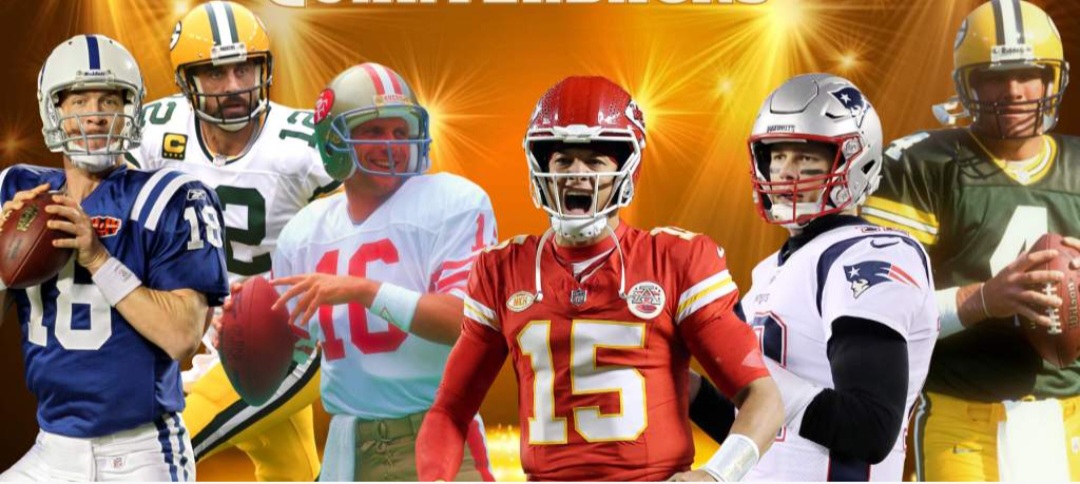
Quarterback is the most talked about position in football and is often spoken of as the key to winning it all. It’s also lamented as the most malnourished position in the sport and as if picking the right one is as much luck as it is a skill. Is that true or is it that teams are bad at picking them? What all can we conclude as fans from the information we have available? I took a shot at it and here’s what I found. As always if and when I get more or better information I will add it here.
First let’s just look at the raw numbers from the draft. I went back to 1980 and the next 44 years, up to 2024, and split it up by decades or when it looked like the rates of success changed. I did that because things didn’t change every ten years or on some convenient easy schedule. For example there was a strong turn upwards starting in 2000 and a big spike starting in 2018, and two complete outlier years in 1983 and 1987. And then I looked at all the other subsequent rounds. The late drafted or undrafted quarterback who goes on to supplant the first round hotshot is a big part of NFL lore and a popular trope among fans and media; just how much does it come to fruition? I was surprised by the results, to be honest.
I came up with a few categories to spell all this out. First Round Picks and Later Picks, which are obvious, and Starters. A starter for this study is someone who went on to start for at least five seasons in the NFL, be it with the team who drafted them or not. I picked five because there are a lot of one or two year wonders who start for that time and then never again, and there are first round guys who got to start for a few seasons because of the investment the team made but were dumped as soon as it was palatable. What I found is that most of the guys who got in five years as a starting QB would ultimately log in a lot more over their careers. So here’s what I found:
Draft Day: Get one early or don’t bother.
| Years | First Round Picks | % First Round Starters | Other Round Picks | % Other Round Starters | Hall of Famers |
| 1980 – 1989 | 26 | 50.0 | 143 | 5.88 | 5 |
| 1990 – 1999 | 22 | 36.4 | 103 | 12.6 | 2 |
| 2000 – 2009 | 26 | 46.2 | 104 | 3.85 | 5 likely |
| 2010 – 2017 | 22 | 36.3 | 73 | 9.59 | 3 likely |
| 2018 – 2024 | 27 | 66.7 | 54 | 3.703 | 3 possible |
| Totals | 123 | 47.96 | 477 | 7.776 |
So if you want to land a guy who will go on to be a fulltime starter for your team, you better get him in the first round where you have an almost 50/50 shot, whereas after that you have a less than 10 percent chance of succeeding. Out of the 59 first round draftees I counted who became five year starters, 56 of them started at QB so for the team that drafted them. So all that comes to say that NFL teams have found a guy who will start for them and start for at least five years in the league in the first round about 45% of the time. On the other hand the combined rate for the second round and every subsequent round was 5%. So if you’re going to find a fulltime starting quarterback it’s much more likely to be in the first round than later. This tells me that teams are much better at sorting out first round talent at quarterback than at finding a good one later on.
But what about Tom Brady?
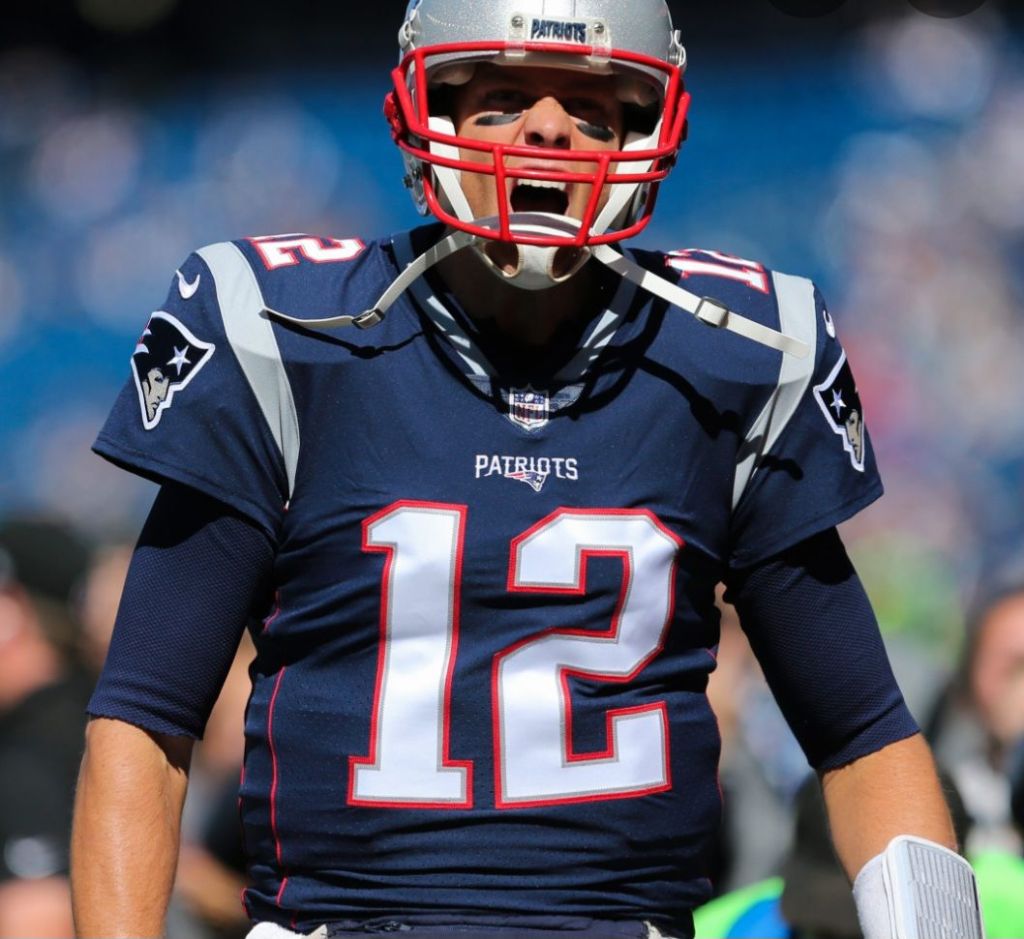
What about him? Yes, the all time winningest quarterback in NFL history was drafted in the sixth round, and would beat out a former number one overall pick who had become a Pro Bowler in his own right in Drew Bledsoe. But the one of the very reasons that he is such a big deal is that guys like him rarely even ascend to becoming a regular starting quarterback in the NFL. Brady is a unicorn amongst unicorns and you’re much more likely to find one or even several Drew Bledsoes – first round guys who put up numbers, make Pro Bowls, and can get you to the Super Bowl if things break right – over the next 40 years than another one of him.
Another thing I noticed was that the rate of success in the first round took a sharp turn from 2000 to 2010. I have no idea why. In the 80s and 90s the combined hit rate was 43.8%, which isn’t far off from the 2000s, but if you take out the 1983 and 1987 classes it falls to 36.8 combined and 38 and 36 percent respectively for each decade separately. And then in the 2010s it fell back to 36% through 2017. It would take more time than I have on my hands to draw a link between what was going with quarterbacks at the college level during the worst decades and how those draft classes shook out, but I imagine there is at least some correlation. It seems like there are just some periods where the evaluations have fallen behind the reality on the ground in the league. There are currently 15 Super Bowl winning quarterbacks in the Hall of Fame and half of them won their first one within the first eleven years of the game’s existence. Which means that in the 48 years since Super XI in 1977 there have only been 7 more Hall of Fame quarterbacks winning the Super Bowl for the first time. Something turned for the worse after 1980 in the process that wasn’t corrected for 20 years.
What about winning?
So does landing a starting level quarterback in the first round actually correlate to winning more? I looked back at all the Super Bowl winners since the 1980 season. Out of the 45 winning teams 24 of them played a quarterback drafted in the first round, 53%, and 23 of the runner ups (51%) had a quarterback who went first round. More specifically I counted 27 different quarterbacks who won those 45 Super Bowls and 15 of them went in the first round (56%), while only 16 of the 36 different runner ups (44%) did so. That means you’re more likely to win a Super Bowl with a quarterback who was drafted in the first round but it’s not as big a requirement to get to one. And if you take the huge outlier in the form of one Tom Brady out of the equation and it’s 24 out of 38 (63%) Super Bowl winners who had a first round quarterback, stacking the deck even further.
What about just making the playoffs? Well, over both of the last two seasons 12 out of the 14 playoff starting quarterbacks went in the first round. Expanding it out to five years here’s what it looks like:
| Season | Playoff QB drafted in the first round | Playoff QBs on the team that drafted them in the first round |
| 2021-2022 | 8 of 14 | 7 of 8 |
| 2022-2023 | 8 of 14 | 8 of 8 |
| 2023-2024 | 10 of 14 | 6 of 10 |
| 2024-2025 | 12 of 14 | 7 of 12 |
| 2025-2026 | 12 of 14 | 10 of 12 |
So every year in the last five years a huge majority of playoff starting QBs were first round picks, 50 of 70 in total (71%) and 38 of those 50 (76%) were on the team that drafted them. In total 54 percent of the teams that made the playoffs over the last five years started a quarterback that they drafted in the first round. And in the last two years it has been 12 out of 14. Going further, in this year’s playoffs the final four teams were all quarterbacked by first round picks and in three out of the previous four years it was 3 out of 4. So again, the first round is where to look.
What about the Hall of Fame?
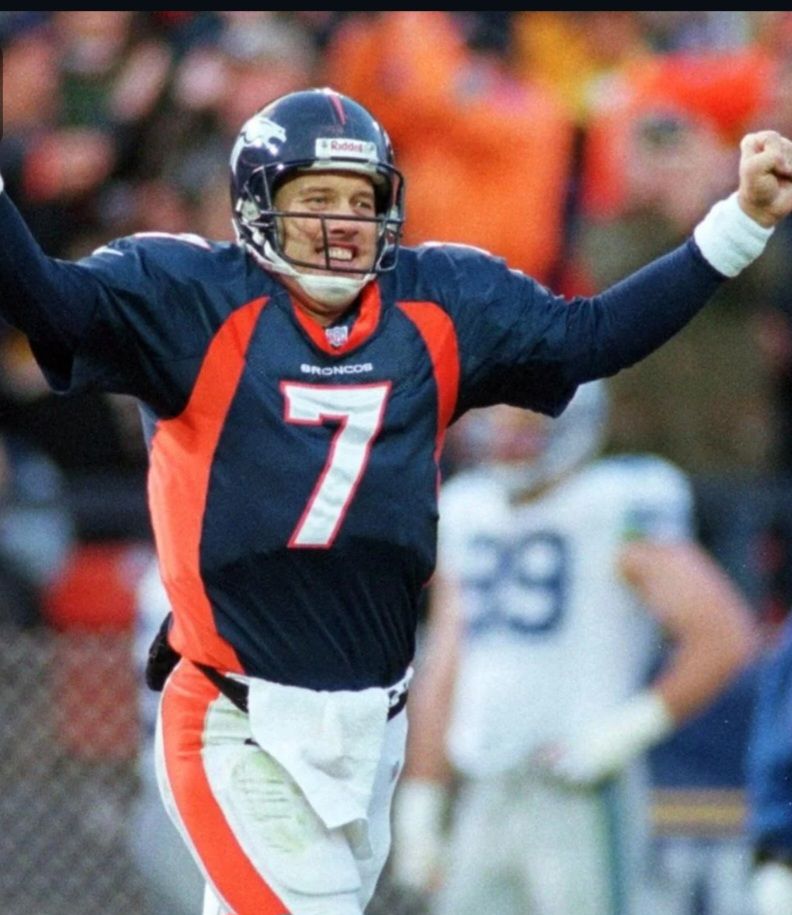
There are only 7 quarterbacks drafted in or after 1980 currently in the Hall of Fame. Out of those 7, 6 (85%) were first round picks – Dan Marino, John Elway, Jim Kelly, Steve Young, Troy Aikman, and Peyton Manning. And the one is Brett Favre, who had some off the field reasons for falling out of first round. In the next group that has passed the career achievement threshold to get in (Tom Brady, Drew Brees, Eli Manning, Phillip Rivers, Ben Roethlisberger, Aaron Rodgers, Matthew Stafford) 5 out of 7 are first rounders (71%). And the guys who are current active veterans and are on a Hall-worthy trajectory (Patrick Mahomes, Josh Allen, Lamar Jackson, Joe Burrow) are all first rounders. So again get em early or don’t spend a lot of time looking later.
Conclusions
There are three things you can take away from all this:
- The first round has been a coin flip for finding a guy who will be a long term starter in the league
- You’re much more likely to find one there than in the later rounds.
- If you want to find a starter and there isn’t a guy you like in the first round, you’re better off signing or trading for a veteran (and even then the good ones were likely to have been someone else’s first round pick in a previous draft)
That may seem like some Captain Obvious kind of stuff but I was a bit surprised at the first two given the rhetoric that we often hear about quarterbacks and the draft, and how easy it is for fanbases to fall in love with the backup or the guy who was drafted late if he shows any inkling of NFL ability. I did not imagine that the success rate for finding a five year starter at quarterback in the first round would hit almost 50% (47.9) over the last four and a half decades like it has. I also figured the success rate post first round would be much higher than single digits. But guys like Kirk Cousins and Brock Purdy, while having proven themselves to be good and productive NFL QBs, have been dining out for years off of their draft status vs several of the guys who have washed out during their careers. (Cousins may have profited from being The Other Guy more than any quarterback in the last 40 years). And of course there is Brady, the man who will forever be the patron saint of late drafted quarterbacks, and Kurt Warner, who is the same for undrafted ones. But those two guys are special cases among special cases who no one should go into the draft or free agency expecting to get. And as it turns out you’re not likely to find a Cousins or Purdy in the draft either. You’re much more likely to land a Drew Bledsoe or Matt Ryan or Donovan McNabb in the first round – guys who put up numbers, start for several years, can get you to a Super Bowl, and come just short of reaching the Hall of Fame – than a Cousins or Purdy. So no matter what anyone tells you it’s better to pick high than hunt for a bargain.

 Stroke of Genius