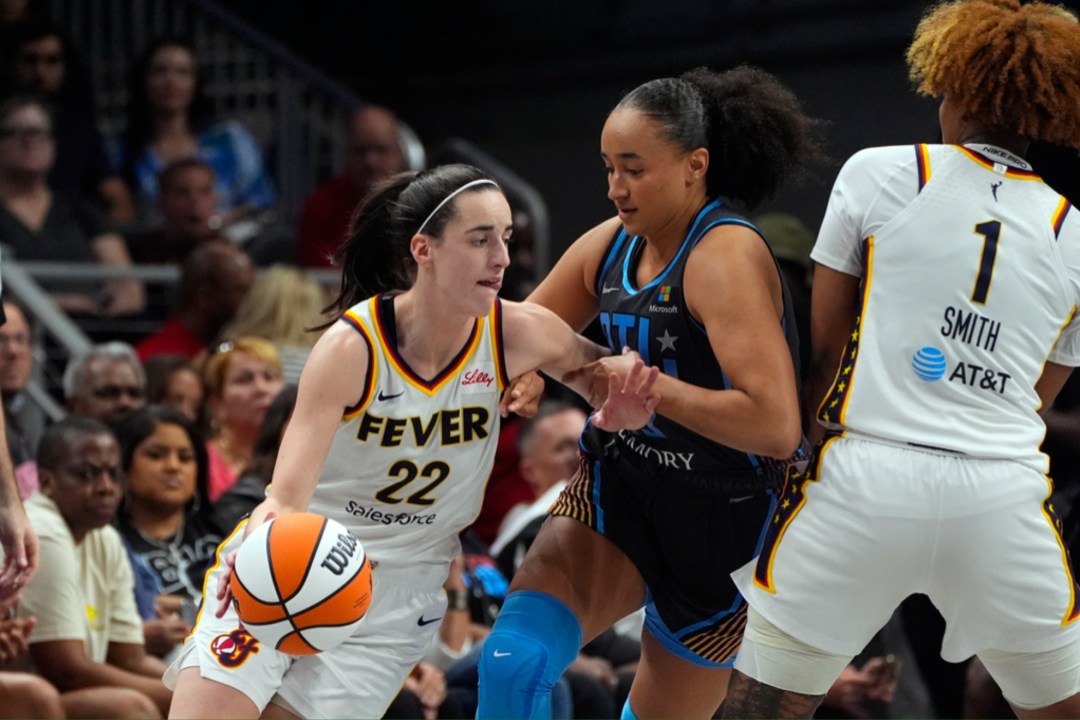
In 2026, the third year of what I’ve come to call the Caitlin Clark Experience in the WNBA, something has happened that I did not anticipate: the discourse has gotten worse. To be honest I thought that by now, in year three of all this, that the hot takers and bad actors would have burned themselves out and things would resume to a much more sane level of sports talk tomfoolery when it came to the league. But no, everyone has dug their heels in even further and now confirmation bias reigns supreme. Yes, boys and girls, whatever your take is on Clark, her fellow players, her and other players’ fans, and the league itself, there are more than enough echo chambers to prove that you indeed are correct about everything. Love her or hate her, you can find whatever you need to feed those feelings. And while that’s true for every sport to an extent the difference with the WNBA is the tone. Everything – every stat, every highlight or lowlight, every video clip that’s shared, is VERY SERIOUS. Your opinion on Clark, positive or negative, can get you branded a racist towards either Black or White people. Or an Uncle Tom, or a performative ally, or a coddler or someone who doesn’t understand how business works. It’s a mess, and it should have run out of gas by now but for a number of reasons it’s only picked up steam. And for a lot of longtime WNBA fans it’s made the experience of being fan not as fun as it used to be. Which wasn’t supposed to happen. Normally, adding an exciting player who had an all timer of a college career is grounds for celebration but it hasn’t been for a lot of WNBA faithful. Here’s my attempt at looking at all of this to figure out what happened and why. But we need to start at the real beginning, which isn’t 2024 but much longer ago.
In the beginning the league was the talk of the town. Spinning out of the 1996 Olympics, the WNBA was formed using the stars of the women’s Olympic team as it’s cornerstones. There was prime TV time, sponsors, major network backing, you name it. But that would end thanks to a combination of those initial stars retirement and outright sabotage by some of it’s partners like ESPN who would relegate their games to ESPN2 out of spite (former President Mark Shapiro is on record saying that he didn’t want to run their games but he had to so he put them on the Deuce). By the late 2000s and early 2010s the league was an afterthought in the sports media landscape, barely mentioned and usually with derision. At it’s nadir the league would be forced to move to smaller arenas and even contract a few teams to stay afloat. But in that despair it became something that no other sports league was: a community. Forged in the fires of abandonment when sports media and popular culture looked away from it, the players and the loyal remnant of the fandom came together to appreciate each other like no other league and it’s fans. The WNBA is a truly unique league in that it is by far the most welcome space in sports for women of color and queer women of all races. There was no shame and no stigma – players are out and proud, even dating each other in public. Women of color don’t just hold most of the roster spots they hold real positions of trust and leadership throughout. This community is also a heavily politically active one – they were front and center in the Black Lives Matter protests and the players on the Atlanta Dream went as far as to openly defy the team owner’s political ambitions – endorsing her Senate opponent and ultimately forcing her from the league entirely. COVID did a number on the league, killing much of whatever momentum it had left but by 2023 attendance had rebounded to pre-COVID levels. There was still a long way to go to get back to where things were 20 years ago, though.
Enter Caitlin Clark.
Clark had become a huge star at the University of Iowa, so big that the Hawkeye’s games were being moved to bigger arenas to accommodate the demand to see her play. Her games were drawing big TV audiences as well, and when Iowa made it to the Championship game in her junior and senior years there was a huge spike in the TV audience numbers, as you can see below:
| Year | Final Four Viewership (in millions) | Final Game Viewership |
| 2022 | 3.23 (UConn vs Stanford) & 2.16 (South Carolina vs Lousville) | 4.85 (UConn vs South Carolina) |
| 2023 | 5.632 (Iowa vs South Carolina) & 3.444 (LSU vs Va Tech) | 9.915 (Iowa vs LSU) |
| 2024 | 14.426 (Iowa vs UConn) & 7.173 (South Carolina vs NC State) | 18.882 (Iowa vs South Carolina) |
| 2025 | 3.6 (South Carolina vs Texas) & 4.7 (UConn vs UCLA) | 8.5 (UConn vs South Carolina) |
| 2026 | 5.4 (UConn vs South Carolina) & 5.0 (UCLA vs Texas) | 9.88 (UCLA vs South Carolina) |
Clark not only drew big crowds she put up big numbers on the court, finishing as the all time leading scorer for all of college basketball, the all time women’s leader in 3 pointers made, and the third all time assist leader in women’s college ball. Clark had become a huge star by way of breaking those records and taking Iowa, who’d only been to the Final Four one time in it’s history, to back to back title games with tournament victories over an undefeated South Carolina in 2023 and perennial power UConn in 2024. Clark became a phenomenon, bringing in lots of new viewers and bringing back some old ones. And the timing was perfect, right in time for the WNBA draft and the new season. The big TV numbers carried over into the WNBA draft, which saw an explosion in viewership in 2024 just like Clark’s Hawkeyes delivered for women’s college basketball:
| Draft Year | TV audience |
| 2022 | 403,300 |
| 2023 | 572,000 |
| 2024 | 2,450,000 |
| 2025 | 1,250,000 |
| 2026 | 1,500,000 |
Clark’s audience so far has stayed along for the ride. The Fever dominate the leagues highest rated games (the nine most watch games to date this season are all Fever games) and the most viewed highlight packages on it’s YouTube channel. All Star votes in 2024 grew to six times what they were in 2023. The All Star Game went from 834,000 viewers to 3.44 million in 2024, and back up to 3.2 million in 2026 after the Clark-less game dipped to 2.19 million in 2025. And Fever road trips often sound like home games with so many people coming out to see them and her. This all sounds like a match made a heaven, like Magic Johnson in 1979 or Shaquille O’Neal in 1992 or Tiger Woods or Peyton Manning or Michael Vick. But there was only one problem: this was the WNBA, and it’s not like those other leagues.
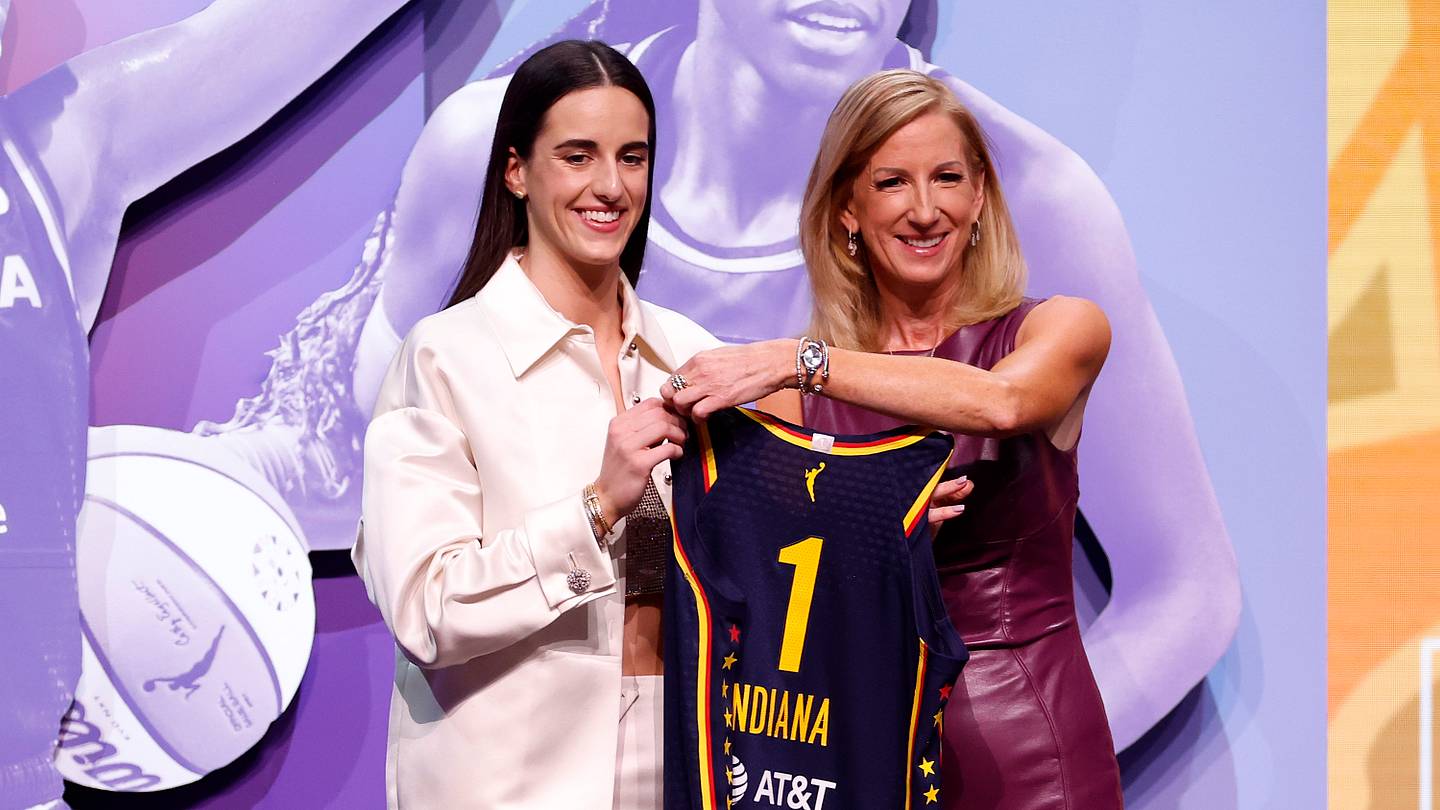
As I said earlier, the WNBA community is a group that came together under not so great circumstances, has a certain set of beliefs and it’s own shared history. Clark isn’t a part of that, and not because she’s white and heterosexual. She is, however, both of those things while being politically silent (the closest she’s come to anything resembling a political statement was liking an IG post from Taylor Swift endorsing Kamala Harris and Tim Walz, and after being attacked for it said she was just co-signing people exercising their right to vote). When asked about the racist comments that have been made by many on her behalf about her opponents she has denounced them. But for better or worse she’s not one to grab a microphone and tell you how she thinks about anything if you don’t ask her. In a league where the players wear their beliefs on their sleeves and openly campaign during election season, that is seen by a lot of people as not doing or saying enough. To a lot of fans she’s leaving too blank a canvas, which has led to many people of all political stripes to paint their own interpretations of what exactly she stands for. I’ve been at this long enough to know that unless public figures show or tell you exactly where they are politically, like saying it directly or attending a rally, it’s best not to try and assume because you stand a real good chance of being wrong. But in this league keeping it to yourself is looked at as a reason to not trust you, even if you don a ‘Pay Us What You Owe Us’ t-shirt in solidarity with the union during All Star warm ups. And compared to Paige Bueckers who is also white but very much embodies the vocal nature that is the custom there a lot of people just flat out find her lacking. (My take on celebrities and politics is really simple: I want you to stand for something, so long as it’s what I also stand for. If you don’t feel the same then yes, keep your mouth shut about it and don’t ruin my experience watching you.)
This reaction to her has been something other than the typical skepticism and eye rolling that an extremely hyped rookie gets coming into a league. A question that gets asked regularly even now is why did Clark get this big push out of everyone. She got this push as a business decision, pure and simple. Stars sell leagues and bigger stars sell even more. Without stars even Championship teams don’t sell much outside of their local markets if we’re going to be honest. (I got 3 Super Bowl winning teams in Washington that nobody outside of the area remembers much as proof.) As far as the WNBA goes, are there people in high places in the league who believe that Clark represents a chance to reach demographics, who are not part of the WNBA community? Of course there are. But they didn’t try this with Sabrina Ionescu who is every bit the straight, white woman that Clark is. Clark’s already existing immense popularity from college provided the league with somebody who did not have to be sold to outsiders because they were already interested. Clark set records, was exciting to watch, has some attitude, and took Iowa all the way to the championship game twice. She was a phenom, a car crash, and an underdog story all rolled into one. She was Jimmy Chitwood from Hoosiers mixed with Rocky Balboa with some old school baseball manager/college basketball coach attitude. All they had to was put her in front, ride the wave, and count the money. Or so they thought.
A lot of the WNBA faithful, both fans and players, were not interested in treating Clark as if her peers were not the other rookies, but big stars from other sports like who landed with a similar bang like Shaquille O’Neal and Peyton Manning. They did not like the idea that she was going to be pushed and promoted more than the ladies who had been holding it down through the lean years, and many felt that the new fans she was bringing in would be courted while they were taken for granted. Clark’s promotion by the league and many traditional sports media figures was taken as a slap in the face to all the women who came before her and who are league veterans today. This piece from the The Ringer spells out a lot of it, and I’ll add that this isn’t just saltiness or distrust, it’s fear of erasure. The Lisa Leslies and Sheryl Swoopeses have their place cemented already, but Clark’s arrival on the scene put attention on her that Aja Wilson and Brenna Stewart were not getting. It made the then two but now three time champion Aces into an afterthought while until this year Clark’s Fever were never better than a game or two above .500. Clark’s teammates, even those who don’t start, get more All Star votes and sell more jerseys than some future Hall of Famers. Sophie Cunningham has become a bigger star in a year and a half with the Fever despite being a sixth woman and only sometime starter than anyone on the Aces outside of Wilson. To many it all looks like a complete dismissal of the work that many were putting in, and one big effort to move some people aside in an attempt to bring in others, a gentrification of the league if you will.
But here’s the big elephant in the room. All sports leagues that are dominated by non white people are all trying to thread the same needle: how do we sell this league where most of the participants are Black, to White people? None of these leagues believe that there are enough White people who are not prejudiced or full blown racist to just play it straight and hope for the best. The NFL made the quarterbacks the stars, and for a long time kept that position all or mostly all white, and now even as the position has become more Black there are still enough White ones who are great enough to keep putting in front on the posters. The NBA has taken a different approach. While they always leave the door wide open for the next Larry Bird to show up, they have largely chosen to ride with the Black players at the top of the league as best as they can, while hoping and praying for the next one media savvy and charming enough one to take over for Lebron the way he did for Jordan and as Jordan did for Magic and Dr. J. David Stern for all his flaws never stopped hard selling the league’s Black players to the rest of the world, even when it led to him instituting the infamous dress code back in the early 2000s. The WNBA has a different set of problems in that it’s players are not just mostly Black, they are all women and many are openly queer. Whatever trepidation there is about selling Black players to White people in the other sports, those players are still men and publicly heterosexual. Which brings to the people who I think are most to blame here: the people running the league.
The WNBA leadership is at fault here in that it sure looks like they thought they could just follow the old playbook for bringing in a new phenom – send her out there, let her get through the customary rookie hazing, and then everything would be great – while not realizing that the league they run is like no other. This was not the cocaine ridden NBA of the late 70s where the Finals were on tape delay, where if anyone asked why the hell were you pushing Magic and Bird so hard you could just point to, well, everything. While the WNBA had gone through some dark days of contraction, moving to smaller arenas and outright suppression by the powers that be at ESPN, attendance had rebounded to pre-COVID numbers and TV ratings were slowly starting to climb. And given that the league has always been coy and sometimes downright murky in how they speak on their finances there was no overt evidence that it was in need of any kind of savior. To the players who were already there the status quo with some continuing incremental progress and some better accommodations in the next CBA looked just fine. The loyal longtime fans were fine with things as they were as well – as long as the league was operating and didn’t have to cancel games or contract teams and the games were accessible enough on TV all was well. So to come out of the blue in 2024 and anoint this one rookie as the star to lead them to the promised land was an exercise that was going to leave a lot of people feeling some kind of way.
There’s also the complete lack of foresight from league leadership as to what was coming with Clark. Increased attention brings with it increased scrutiny, particularly in the social media era. A benefit of the league’s lower profile was that you didn’t have grifters jumping on to mine for anything they could use for clout, or social media goons using 10 second clips and still photos out of context to paint narratives and get engagement, or media talking heads giving ill informed takes about a topic they barely watched if they watched at all. Or stans for that matter with their parasocial relationships, their ‘my fave is Jesus and yours is Satan’ views of the world, and their ‘it’s fine if my fave does it, but if yours does it we have a problem’ takes on damn near everything. The league leadership, particularly the commissioner, looks to be entirely clueless about all this. When asked about the toxicity that had taken hold of the discourse from the on court competition between Clark and Angel Reese, she essentially shrugged her shoulders and gave her version of the Eric Bischoff ‘controversy creates cash’ line. Cathy Englebert saw Clark and Reese as her Magic and Bird without any understanding of how this situation couldn’t have been any more different. Bird wasn’t latched on to by a legion of racist opportunists with unlimited ways to communicate, looking to piggyback on his career into a whole new venue to spew their toxic engagement bait. And Magic didn’t have anyone looking to use the racism lobbed against him as a way to boost their own profiles under the guise of defending him. There was no 24/7 clickbait media to fan the flames for ratings….imagine the 1984 Lakers-Celtics Finals, where the Celtics got rough to change the series and Magic faltered down the stretch to earn the ‘Tragic Johnson’ moniker in today’s climate.
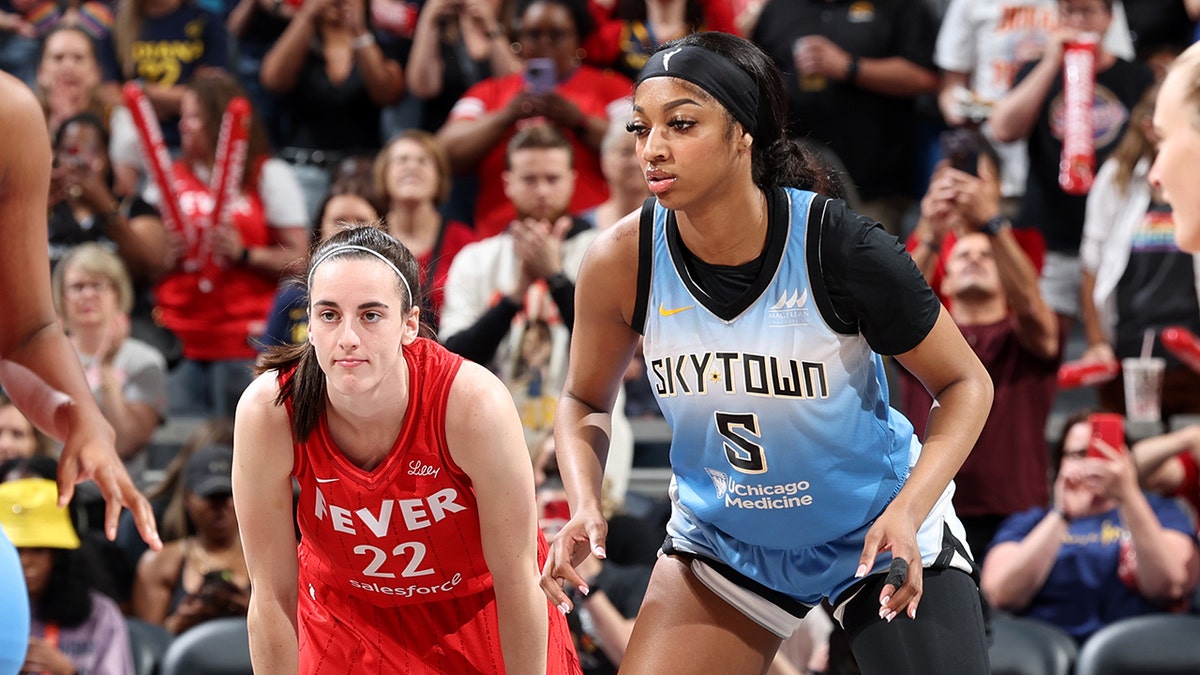
The on court part was different, too. Magic went to a team that was only missing him from being Finals ready and Bird landed on a team of veterans that were good enough for him to galvanize into a better unit as a rookie, which would soon after land two more Hall of Famers in Parish and McHale. Both landed in places that enabled to garner some major team success out of the gate, and thus bring their college battle in the NCAA Championship game to a bigger stage for bigger stakes. In today’s case Reese went to a dysfunctional Chicago Sky franchise know for chasing away Hall of Fame players, and would eventually do the same to her, while Clark went to a moribund Fever team that she has been able to help get to the playoffs but is still lacking in some areas to get them far enough above .500 to be taken seriously as a contender. There appears to be zero chance in the near future that the Iowa-LSU Final will be revisited by the Fever and the Atlanta Dream where Reese was traded in 2026. With little on court to celebrate beyond individual numbers, all we are left with is fertile ground for all the takes. Clark’s turnovers and Reese’s shooting percentages are held up by their respective detractors as damning evidence of their failures as players while every facial expression, every quote, are used to concoct full psych evaluations and moral judgments of them as human beings. The league bears a big responsibility here as well. Every other sports league exercises some degree of influence if not flat out extortion to shape media coverage in their favor, but the WNBA seems to think everything would be fine if they did no such thing. And allowing this void to exist opened the door to every kind of bad actor to run in and set up their own shop to do what they do everywhere else in the world.
Where is this going? I have no idea. I can only control what I can control, which is my own social media intake and how I react to it. I will say that almost three years in, if you’re still seeing a lot of the crap then it’s somewhat of your own doing. I manage to avoid most of it now save for the times I get a little curious and go looking for it. We can’t stop people from saying awful or stupid things but we can cut them off from getting into our worlds and into our heads as much. It’s gonna be up to us, because the league and the media damn sure aren’t gonna do it for us.


